

Medical Sonography

Career Community:
Health Sciences
See your future in healthcare with medical sonography—scan for success.
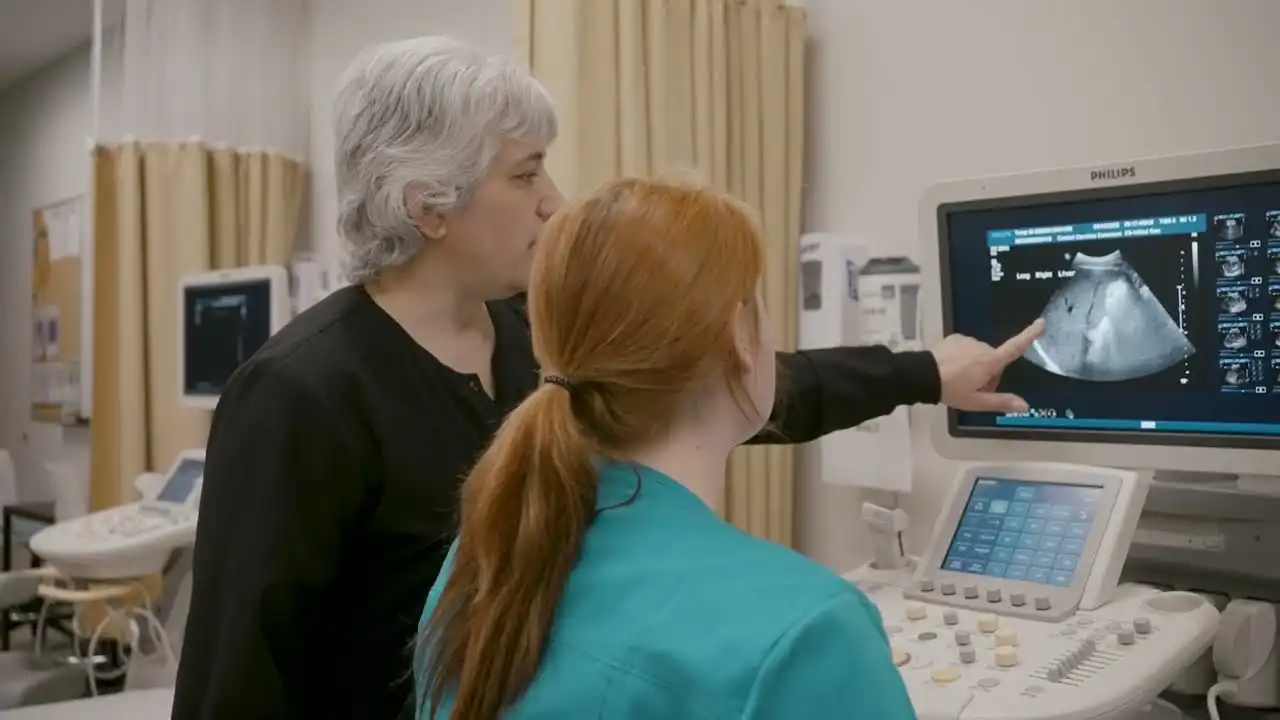
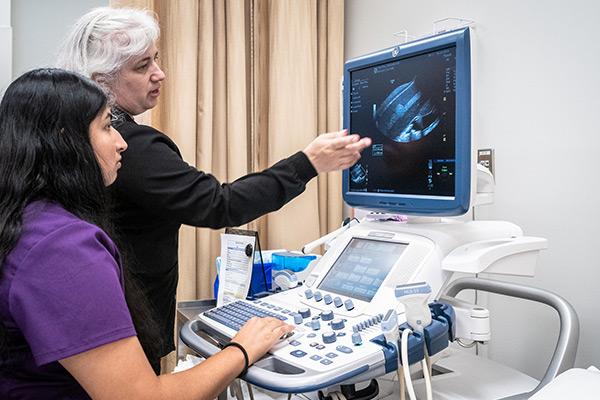
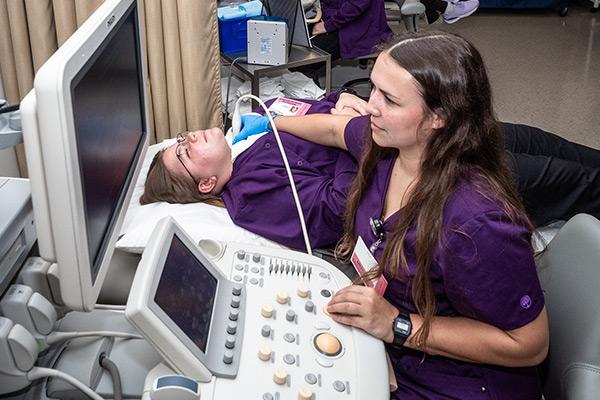
Careers
The overall employment outlook for ultrasound technicians (sonographers) is projected to grow much faster than the average. The expected growth over the next 10 years is 10%. This equates to approximately 9,600 job openings each year over the decade (Diagnostic Medical Sonographer Occupational Outlook)
- Hospitals (large and small)
- Clinics
- Travel Companies
- Research
- Physician's Offices
Program Contact
The Medical Sonography Program is accredited by The Commission on Accreditation of Allied Health Education Programs (CAAHEP) upon the recommendation of the Joint Review Committee on Education in Diagnostic Medical Sonography (JRC-DMS).
Upon meeting examination prerequisites, students will be able to sit for their ARDMS Registry exam.

Commission on Accreditation of Allied Health Education Programs (CAAHEP)
9355 - 113th St. N, #7709
Seminole, FL 33775
Phone: 727-210-2350
Fax: 727-210-2354
Email: mail@caahep.org
Joint Review Committee on Education in Diagnostic Medical Sonography (JRC-DMS)
P.O. Box 2050
Ellicott City, MD 21041
Phone: 443-973-3251
Fax: 866-738-3444
Email: mail@jrcdms.org
The Medical Sonography Program is committed to preparing competent, entry-level sonographers in the cognitive (knowledge), psychomotor (skills), and affective (behavior) learning domains. The program strives to provide a high-quality educational experience that promotes clinical competence, critical thinking, professionalism, and lifelong learning.
Program Goals
- Prepare students to perform diagnostic sonographic examinations competently and safely.
- Develop students’ critical thinking and problem-solving skills in the clinical setting.
- Promote professional, ethical, and effective communication behaviors within healthcare environments.
- Prepare graduates for successful entry into the sonography profession and eligibility for credentialing examinations.
- Foster continued professional growth and lifelong learning within the field of diagnostic medical sonography.
Student Learning Outcomes (SLOs)
Upon completion of the program, students will be able to:
- Demonstrate competency in performing diagnostic sonographic procedures within the program’s specialty areas.
- Produce diagnostic-quality sonographic images and accurately identify normal anatomy and pathology.
- Apply knowledge of ultrasound physics, instrumentation, and scanning principles during sonographic examinations.
- Utilize critical thinking and clinical judgment to adapt examinations to patient condition and clinical presentation.
- Communicate effectively and professionally with patients, clinical staff, physicians, instructors, and peers.
- Demonstrate professional, ethical, and compassionate behavior consistent with healthcare standards.
- Practice appropriate patient care, safety, ergonomics, and infection control procedures in the clinical environment.
- Demonstrate readiness for professional credentialing examinations and entry-level employment.
Diagnostic Medical Sonography Program Effectiveness Data
Institution Name: Central Carolina Community College
Concentrations CAAHEP Accredited: Abdomen-Extended and Obstetrics & Gynecology
Student Retention
| 2025 | 2024 | 2023 | 3-Year Average Student Retention | |
|---|---|---|---|---|
| # Graduates | 6 | 8 | 7 | |
| # Enrolled | 8 | 8 | 8 | |
| % Retention | 75% | 100% | 88% | 88% |
Student Retention: Total # of Graduates/Total # of Students Enrolled
Retention Threshold: 70% of total enrollment (sliding scale is used for cohorts of 9 or less enrolled students)
Job Placement
| 2025 | 2024 | 2023 | 3-Year Average % Job Placement | |
|---|---|---|---|---|
| # Employed | 6 | 7 | 6 | |
| # Graduates | 6 | 8 | 7 | |
| % Job Placement | 100% | 88% | 86% | 91% |
Job Placement: Total # of Graduates employed in 6 months/Total # of Graduates
Job Placement Threshold (within 6 months of graduation): 75% of graduates employed as sonographers in one of program's accredited specialties, continuing their education or actively serving in the military
Test Takers Rate - Abdomen Extended
| 2025 | 2024 | 2023 | 3-Year Graduates Total | % Test Takers 3-Year Trend | |
|---|---|---|---|---|---|
| # Test Taker | 1 | 5 | 5 | ||
| # Graduates | 6 | 8 | 7 | 21 | |
| % Test Takers | 17% | 63% | 71% | 91% |
Test Takers Rate - Obstetrics & Gynecology
| 2025 | 2024 | 2023 | 3-Year Graduates Total | % Test Takers 3-Year Trend | |
|---|---|---|---|---|---|
| # Test Taker | 5 | 5 | 5 | ||
| # Graduates | 6 | 8 | 7 | 21 | |
| % Test Takers | 17% | 63% | 71% | 49% |
Test Takers Rate: Total # of Test Takers/Total # of Graduates for the concentration
Test Takers 3-Year Trend Threshold:
- 50% for programs that have 15 or fewer graduates over a 3-year timeframe
- 60% for programs that have 16 or greater graduates over a 3-year timeframe
Credential Success Rate - Abdomen Extended
| 2025 | 2024 | 2023 | 3-Year Average % Credential Success | |
|---|---|---|---|---|
| # Test Taker | 1 | 4 | 4 | |
| # Graduates | 1 | 4 | 4 | |
| % Test Takers | 100% | 100% | 100% | 100% |
Credential Success Rate - Obstetrics & Gynecology
| 2025 | 2024 | 2023 | 3-Year Average % Credential Success | |
|---|---|---|---|---|
| # Test Taker | 4 | 3 | 0 | |
| # Graduates | 5 | 3 | 1 | |
| % Test Takers | 80% | 100% | 0% | 60% |
Credential Success Rate: Total # of Graduates successfully earning credential/Total # of Test Takers
Credential Success Threshold (within one year of graduation): 60% of graduates passing a credentialing exam per concentration that the program holds accreditation

We’re Here to Help
Want to talk to an advisor about requirements and classes, or get more details on jobs in this industry?