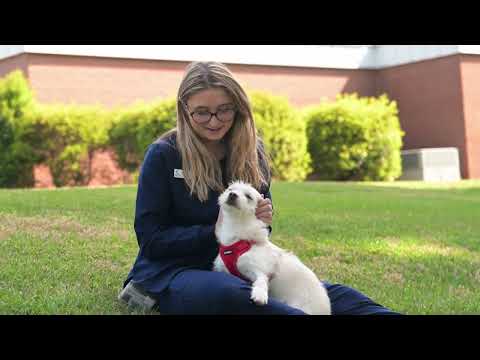
Veterinary Medical Technology
Health Sciences
Love animals? Start your vet tech career and make a real difference.
What You’ll Learn
Students who want to be a Registered Veterinary Technician (RVT) will enroll in the Pre-Veterinary Medical Technology program (A55280VT) and work with their Education Navigator to meet the minimum requirements needed to apply to the program.
The Pre-Veterinary Medical Technology program is designed as a preparation track and does not lead to a degree. Students who decide not to pursue Veterinary Technology will need to work with their Education Navigator to transition into a different degree pathway.
The Veterinary Medical Technology (VMT) degree program prepares individuals to assist veterinarians. This includes:
- preparing animals for examinations, surgery, and other anesthetic events;
- maintaining specialized veterinary, equipment, and calculating and discussing medications prescribed to patients by the veterinarian;
- collecting specimens; performing laboratory, radiographic, anesthetic, and dental procedures; assisting in surgery;
- and providing proper husbandry of animals and their environment.
Note: The program is five semesters; however, there is a six semester option available if a student delays work-based learning to summer.
Students who want to be a Veterinary Assistant will enroll in the Pre-Veterinary Assistant program (A55280VA) and work with their Education Navigator to meet the minimum requirements needed to apply to the program.
The Pre-Veterinary Assistant program is designed as a preparation track and does not lead to a degree. Students who decide not to pursue Veterinary Assisting will need to work with their Education Navigator to transition into a different degree pathway.
The diploma program prepares students to work as veterinary assistants, providing hands-on care and support for animals in clinical settings.
Why Study Veterinary Medical Technology at CCCC?
Hands-On Experience
The CCCC program is the only VMT program in the state that houses animals on campus year-round, allowing students live opportunities to practice their skills.
Great Job Outlook
The job market for veterinary technicians is growing at a constant rate, and our graduates have on average three job offers upon graduation. Graduates are employed across a wide variety of animal care related industries, including hospital settings, clinical laboratories, and the pharmaceutical industry.
Low Student to Faculty Ratio
Our program has a 4:1 student to faculty ratio in our animal labs, meaning our students get intensive training on tough subjects, such as anesthesia and dentistry.
More Helpful Links for This Program
Careers
Graduates of our program receive training that allows them to be employed in a wide variety of settings, including veterinary clinics; diagnostic, research, or pharmaceutical laboratories; zoos; academic institutions; or other areas associated with animal care.
- Registered Veterinary Technician (in small and large animal general practice and exotic species)
- Specialty Hospital Roles (including emergency and critical care, anesthesia, oncology, neurology, and more)
- Pharmaceutical Sales and Pharmaceutical Reporting
- Clinical Pathology Laboratory Technician
- Zoo and Aquatic Animal Care
- Academia
- ASPCA Poison Control
Program Contact

Accreditation Information
The Veterinary Medical Technology Associate in Applied Science (A.A.S) degree program at Central Carolina Community College is currently accredited through the Committee on Veterinary Technician Education and Activities (CVTEA). The VMT program has maintained continual accreditation since 1974, and was one of the first in the country to become accredited through CVTEA and the American Veterinary Medical Association (AVMA). The program had a successful re-accreditation visit most recently in the fall of 2021.
For student information about the CVTEA, visit their website.
Review the CVTEA Veterinary Technology Student Essential and Recommended Skills List (Appendices I) online.
We’re Here to Help
Want to talk to an advisor about requirements and classes, or get more details on jobs in this industry?
Transfer Programs
Credits from select courses within the program may transfer to four-year colleges and universities on a case-by-case basis.